
Rediscovering Columbus Day
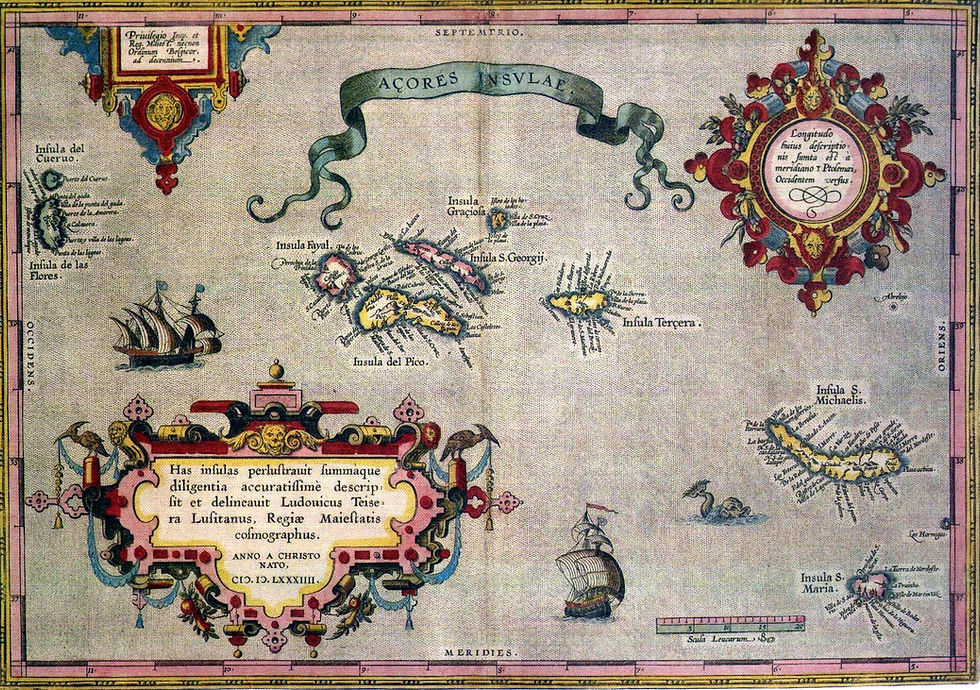
Last week I returned from the Azores Islands in the heart of the Atlantic Ocean. On this trip, I saw where Christopher Columbus and his crew took shelter from a terrible storm in February of 1493. Amidst songs of praise and ardent prayer they survived the ordeal and went ashore to fulfill a vow of thanksgiving for their survival. Barefoot and dressed only in their shirts, half of Columbus' men were captured during their pilgrimage to the nearest chapel. After nine tumultuous days, which were nonetheless filled with prayer, fasting, pilgrimage, and thanksgiving, Columbus and his crew departed from the islands.
Visiting the site of Columbus’ brief stay led me to dwell on the importance of his actions more than 500 years ago. Columbus was a devout Christian with a zeal that led to the lasting European discovery of two entire continents. Today we celebrate Columbus Day as a federal holiday, but many Americans forget why the first national celebration took place.
In 1890, the police chief of New Orleans was gunned down and died the next day of complications. Blame fell on the Italian immigrants of the community and hundreds were rounded up in the days following the murder. In 1891, after murder trials were held and some of the accused had already been acquitted, a mob stormed the prison where the Italians were being held and killed eleven men. Nine of them were shot and beaten to death within the prison: Emmanuele Polizzi was hanged from a lamppost and shot. Antonio Bagnetto was hanged from a tree and shot. It was the largest single mass-lynching in U.S. history. Outrage followed from many Italian-Americans, Italy withdrew its ambassador from the U.S. and rumors of war began to surface. In an effort to ease tensions within the Italian-American community, President Benjamin Harrison cast about for an Italian hero to celebrate. It was in commemoration of the famous Christopher Columbus that he proclaimed the first nationwide celebration of Columbus Day in 1892, marking the 400th anniversary of the explorer’s arrival in the Americas.
While the holiday itself grew out of the 1891 tragedy, Columbus himself was seen as a great man of bravery and faith, who served as an excellent representative of Italian contributions to the story of America. With nothing but dead reckoning to guide him, Columbus embarked on a journey that no other European of his day would dare to attempt. His journals are filled with references to the prayers and fasting of his crew, the trials of the journey, and the displays of faith along the way. When Columbus finally arrived after his 70-day voyage from Spain, he gave a special name to the new land upon which he stood. In a letter intended for the Spanish monarchs, he declared:
"To the first island I discovered I gave the name of San Salvador [Holy Savior], in commemoration of His Divine Majesty, who has wonderfully granted all this."
From the very beginning, Columbus saw his voyage as a mission entrusted to him by God. In signing his name as Christo Ferens, “Christ-bearer,” Columbus viewed himself as carrying the gospel across the ocean to a people in need of evangelization. His very first writings after the voyage mention the people of the Americas and his hope that they would convert to Christianity.
None of these feats make Columbus a saint, and like all great men he had his flaws. That said, the charges brought against him must be weighed in historical context. Although a brilliant navigator, Columbus was a poor governor of Hispaniola, and faced a hostile colony. Between the Spanish settlers who were in revolt and eager for gold, and the natives whose warriors had already destroyed the garrison at La Navidad, the environment was bleak. Columbus harshly disciplined both parties, and it was the mutinous settlers, not the Taíno natives, who got him arrested in 1500. It's true that Columbus sent Taíno to Spain as slaves, but these were primarily captives taken during war, a practice with legal precedent at that time. Queen Isabella, who regarded the Taíno as her subjects, refused to approve their sale and ordered them returned to the New World. Where Christopher Columbus failed the Christian faith, that same faith supplied the remedy. The next decade introduced Christian friars like Antonio de Montesinos and Bartolomé de las Casas, who used the Gospel to combat the settlers' abuse of the natives. Even Las Casas, the fiercest critic of Spanish conduct in the Indies, condemned Columbus’ enslavement of the Taíno, yet he still revered him as a man chosen by Providence and helped preserve his journals for future generations.
As I looked upon the water surrounding the Azores, I thought of those drenched and exhausted sailors, walking barefoot to fulfill a promise made to God. These men had recently embarked on the most consequential voyage in world history, and their reaction upon reaching this land was not one of arrogant celebration, but of prayer and thanksgiving. This is the Columbus who should be remembered: a man who, despite his flaws, nonetheless believed he was doing the work of God. He spread the gospel to those across the waves and gave the first land he found the name of the Holy Savior. In an age that stands on the shoulders of giants yet is quick to tear down and slow to give thanks, Columbus serves as an example of bravery, prayer, and faith amidst trials and difficulties.


